
What Is a Forex Robot? – Definition, History, and In-Depth Analysis

Executive Summary: A Forex robot (or Expert Advisor, EA) is an automated trading program that runs on trading platforms (typically MetaTrader 4/5) to execute trades without manual intervention. This blog post explores the origins and evolution of trading robots, how they function (algorithms, indicators, backtesting), and the main types (rule-based, machine-learning-based, and copy-trading systems). We highlight real-world examples and reputable platforms (MetaTrader Market, MQL5 signals, broker offerings), and analyze their benefits (speed, no emotions) and limitations (overfitting, market risks, broker issues). We also cover criteria for selecting a good EA, performance metrics (CAGR, drawdown, Sharpe, win rate, profit factor), and provide a step-by-step testing/deployment workflow (backtest → forward test → VPS) with a Mermaid flowchart. Finally, we include practical FAQ answers and a comparison checklist for safer evaluation.
Get your trading edge today by purchasing the robot exclusively at HiPips.com
Definition and History of Forex Robots
A Forex trading robot is an automated software program (an Expert Advisor) that analyzes price data and automatically places buy/sell orders in the currency market. Robots operate based on pre-set rules or algorithms using technical indicators (for example MA, RSI, Bollinger Bands, etc.) to generate trading signals. Most Forex robots are developed in MetaTrader’s MQL4/5 language and designed to run continuously on MetaTrader 4 or 5 terminals. In practice, a robot might, for instance, buy EUR/USD when an RSI indicator crosses above 30 and set a specific stop-loss and take-profit, all executed automatically without manual intervention.
Historical context: The concept of automated trading dates back to the 1980s-90s with the rise of computer and network technology. Early “algorithmic trading” was used by large institutions for faster execution. In retail Forex, MetaTrader (released in the mid-2000s) popularized Expert Advisors, allowing everyday traders to use automated scripts. Over time, trading robots have evolved from simple rule-based systems (e.g. if price > X then buy) to more complex systems, including those incorporating machine learning or neural networks. Currently, some advanced EAs utilize AI techniques (like reinforcement learning or LSTM models) to adapt to changing markets. However, most retail EAs remain rule-based or use fixed algorithms.
How Forex Robots Work
Forex robots operate by continuously monitoring market data, applying their programmed algorithmic strategy, and placing trades when conditions are met. Key aspects include:
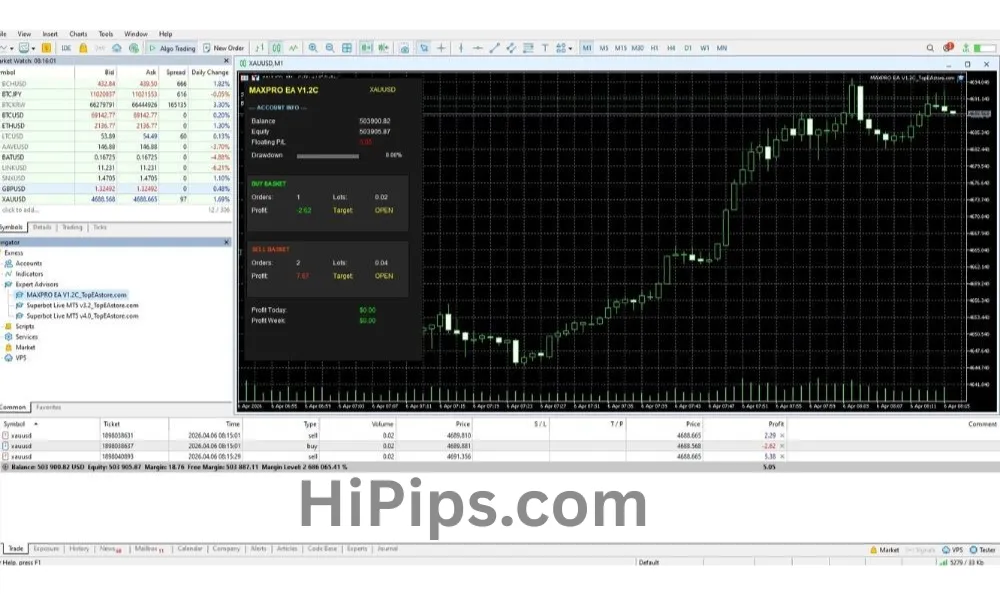
- Algorithms and Indicators:Each EA has a coded strategy. For example, it may watch for breakouts (price above a moving average), volatility spikes, or signals from technical indicators (MACD, Stochastic, etc.). When the criteria are met, the robot executes the trade. The code typically includes rules for entry, exit, stop-loss (SL), and take-profit (TP) orders. Some robots use “grid trading” or “martingale” systems (multiple sequential trades), though these increase risk.
- MetaTrader Integration:Most Forex robots run on the MetaTrader platform using MQL4/5 scripting. MetaTrader provides a “Strategy Tester” for backtesting (running the EA on historical data) and optimization (tuning inputs). Robots can be attached to charts in MT4/5 where they can send and close orders automatically.
- Backtesting and Optimization:Before running live, traders backtest the EA on historical price data to evaluate profitability and risk. Backtesting computes metrics (e.g. profit factor, max drawdown) over past data. Optimization tools can adjust input parameters (like indicator periods or SL levels) to improve results. However, beware of overfitting (tuning parameters too specifically to past data), which can yield misleadingly good backtests.
- Live Execution:On live accounts, the EA trades according to real-time data. Robots act fast (placing orders in milliseconds) and can trade 24/5, reacting instantly to market moves. Traders often deploy EAs on a VPS (Virtual Private Server) near the broker’s server for reliability and speed. The EA manages all order execution, potentially trading multiple currency pairs or timeframes simultaneously.
Key takeaway: Forex robots are essentially if/then-coded systems that scan market conditions constantly. They remove manual execution and emotional bias from trading. For example, they “analyze trend signals and generate buy/sell signals” automatically. But like all systems, their effectiveness depends on the quality of the underlying strategy.
Types of Forex Robots
- Rule-Based (Indicator/Strategy) Robots:These are the classic EAs that follow a predefined set of rules. For example, “Buy when 50-period SMA crosses above 200 SMA and RSI < 30”. All logic is encoded explicitly. Many EAs on MetaTrader are of this type. They are deterministic and transparent, but cannot adapt if market dynamics change.
- Machine-Learning/AI Robots:Some modern EAs incorporate AI or statistical models. They may use neural networks, genetic algorithms, or reinforcement learning to adjust strategies. For instance, a “neural network EA” might learn from recent data patterns to predict the next move. Research indicates that such bots can achieve solid short-term metrics (e.g. a published study showed an RL-based EA with 62% win rate and low drawdown). However, these systems are complex, require substantial data to train, and are still rare in mainstream retail trading.
- Copy-Trade / Social Trading Platforms:These aren’t single “robots” per se, but automated copy-trading Platforms like eToro, ZuluTrade or even MetaTrader Signals let investors automatically copy trades of human “signal providers”. In a way, your “robot” is the system that executes the copied trades. Likewise, broker-specific “autotrade” solutions (like MetaTrader’s Signals service) allow for automated mirroring of selected trader accounts. Copy-trading is distinct from rule-based EAs, but it’s an “automated trading” type where your account trades reactively based on another’s activity.
Real-World Examples and Platforms
- MetaTrader Market (MQL5.com):The official marketplace for EAs and indicators. Thousands of robots are sold or free on MQL5, e.g. Quantum Queen (MT5) for gold (XAUUSD) or Gold Snap. These listings often provide screenshots of backtests or Myfxbook results. For example, Quantum Queen boasts many 5-star reviews and claims steady long-term XAUUSD performance.
- MetaTrader Signals:MetaTrader’s signal service allows traders to subscribe to automated signals of verified accounts. This way, you can copy-propagate an experienced trader’s strategy (in effect using their robot strategy without writing code).
- Broker Proprietary EAs:Some brokers publish or endorse EAs. For instance, TradingView scripts or Exness EAs.
- Academic Example:A research paper (Science Publishing Group, 2025) designed an MQL4 EA using reinforcement learning, technical indicators, and dynamic risk mgmt. They reported a demo win rate 62%, profit factor 1.45, and max drawdown ~4.2%, showing how AI can improve an EA.
- Popular Expert Advisors:Commonly discussed EAs include WallStreet Forex Robot (MT4 scalper), Milky Way (MT4 trend-follow grid), and Quantum Queen (MT5 gold EA). For example, WallStreet Forex Robot (v2.0) reports very high win rates in backtests (80–92% on majors) with moderate drawdowns and profit factors ~1.5–2.0.
Benefits of Forex Robots
- Emotion-Free Trading:Robots follow logic, not fear or greed. As Investopedia notes, bots aim to “eliminate emotional trading biases” by providing clear rules.
- Speed and 24/5 Operation:They execute trades instantly (millisecond reaction) and can trade around the clock (during market hours) without fatigue.
- Consistent Backtesting:Strategies can be rigorously backtested and optimized on historical data, something human traders cannot do in practice. Robots allow systematic optimization and statistical analysis before going live.
- Multitasking:An EA can monitor multiple pairs and timeframes simultaneously, something very hard to do manually.
- Risk Management Automation:Robots can include strict stop-loss, take-profit, and position-sizing rules, potentially enforcing discipline more strictly than a human might.
- Learning from Data (for AI bots):Advanced EAs using AI can potentially adapt and improve with new data (for example, retraining a model on recent market behavior).
Limitations and Risks
- Market Risk:No robot can predict sudden market shocks or news. A severe event (e.g. flash crash, geopolitical shock) may wipe out short-term gains. As Investopedia warns, “long-term performance is inconsistent”, since EAs may fail when a “sudden price movement can wipe out profits made in the short term”.
- Overfitting:A robot that is over-optimized on past data may look great in backtests but perform poorly live. Some vendors may curve-fit their systems. Always be skeptical: “some companies … use curve-fitting to generate great results when backtesting … but these are not legitimate systems”.
- Broker and Technical Issues:Slippage, requotes, spikes, or broker outages can hurt EA performance. Some EAs even include “broker protection” modules to hide stop levels. Traders must also ensure their broker allows the required trading style (no hidden commissions that an EA can’t handle).
- Emotional & Misuse Risks:Deploying an EA isn’t “set it and forget it.” New traders might misuse robots (high risk settings, no monitoring) and incur losses. There is “no holy grail” in trading. Even professional bots are kept secret by hedge funds.
- Cost and Scams:Buying an EA from an unknown source can be risky. As Investopedia notes, fraudulent vendors might vanish after selling a system, or only share cherry-picked backtests. Many traders end up building custom systems to avoid scams.
Selecting a Forex Robot: Criteria and Checklist
When choosing or evaluating a Forex robot, consider:
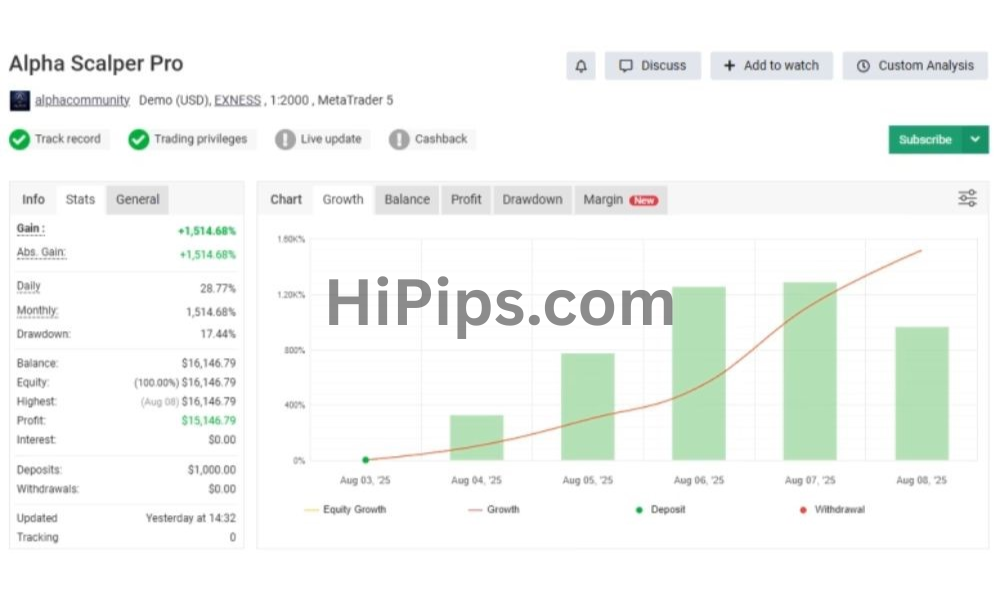
- Verified Performance:Prefer robots with audited/live-account proof (e.g. Myfxbook). Demo/backtest figures alone can be faked. As Investopedia advises, “traders should verify the company’s reputation to avoid scams”. A Myfxbook or verified signal with live track record is ideal.
- Performance Metrics:Examine key stats:
- CAGR (Compound Annual Growth Rate):Average annual return accounting for compounding.
- Max Drawdown:The largest peak-to-trough equity drop. Lower is safer.
- Profit Factor:(Gross profits / Gross losses). >1.5 is generally good.
- Sharpe/Sortino Ratio:Reward per unit risk (higher is better).
- Win Rate:% of winning trades (investigate average win vs average loss too).
- Sample Size:Number of trades or length of testing period. More is better (e.g. hundreds of trades, multiple years).
- Strategy Transparency:Understand the strategy logic. Does it use indicators or news? Rule of thumb: avoid “mystery box” systems. The Axi article suggests checking reviews/forums to gauge authenticity.
- Risk Controls:Confirm if the EA has protective measures (stop-loss, spread filters, emergency kill-switch). The Medium review noted WallStreet’s features like hidden stops and broker-spy modules.
- Compatibility and Requirements:Check broker compatibility (e.g. ECN vs standard, 4/5 decimal, hedging policy). Also hardware: you’ll likely need a VPS to run 24/5.
- Support and Updates:Paid EAs often come with support and periodic updates. Free EAs might lack help. The Axi article suggests doing background checks and using the Strategy Tester.
- Demo Testing:Always try the EA on a demo account. Observe its behavior: does it overtrade or stall? Even after positive backtests, confirm forward performance on demo.
Below is a pre-deployment checklist summarizing these points:
| Criterion | What to Check |
| Verified Track Record | Verified Myfxbook or live signal; compare live vs backtest results; check trader reviews. |
| Performance Metrics | CAGR %, max drawdown, profit factor, Sharpe; win rate and average trade P/L (if available). |
| Strategy Logic | Understand entry/exit rules; avoid “black box”; ensure no forbidden techniques (e.g. scalping if broker disallows it). |
| Risk Management | SL/TP presence, trade sizing, martingale or grid usage; any max drawdown control. |
| Market Conditions Tested | Backtested over different market regimes (trends, sideways, volatile news events). |
| Demo Trial | Run EA on demo for weeks; monitor actual trading vs expected; adjust settings cautiously. |
| Broker & Environment | Ensure broker type (ECN vs MM), spreads, latency suit the EA; run EA on recommended settings (leverage, lots). |
| Infrastructure | Use stable VPS & internet; set up alerts or VPS watchdog for EA uptime. |
| Capital & Risk Tolerance | Only allocate a portion of capital; set realistic risk (e.g. <5% equity per trade); use external stops if needed. |
Step-by-Step Guide to Testing and Deployment
- Backtesting:Use MetaTrader’s Strategy Tester to run the EA on historical tick or 1-min data. Evaluate profit curves and metrics (equity curve smoothness, profit factor, max drawdown). Test across multiple currency pairs and timeframes if the EA is multi-symbol.
- Optimization:Adjust EA inputs (e.g. indicator lengths, risk parameters) within Strategy Tester to seek better performance. Avoid over-optimization: keep a “walk-forward” approach by validating optimized parameters on out-of-sample data.
- Walk-Forward Analysis:Partition the data (e.g. train on years 2010–2018, then test on 2019–2020). Check that performance remains reasonable out-of-sample. This mimics future deployment and guards against fitting.
- Demo Forward Testing:Attach the EA to a demo account and let it trade in real-time (forward test). Treat it as a dry run: does it follow the backtest trend? Does drawdown or equity curve look normal? According to ATFX, forward demo confirms a strategy’s feasibility before going live.
- Adjust and Iterate:If forward results deviate, review settings or strategy logic. It may reveal model risk or parameter issues. Limit number of concurrent EAs running.
- Go Live on Small Scale:Deploy the EA on a small live account (or micro lots) initially. Monitor closely. Compare actual results to demo/backtest. The Axi guide recommends demo testing to build confidence first.
- VPS Deployment:Once satisfied, run the EA on a reliable VPS (per [63†L178-L187]). This ensures 24/5 uptime and low latency. Set up remote alerts in case trades go awry.
- Risk Management & Supervision:Continuously monitor the live EA. Have external protection: e.g. an equity stop (if possible) or regularly checking that drawdown doesn’t exceed planned limits. Always be ready to pause or withdraw funding if abnormal behavior appears.
- Regular Review:Periodically re-evaluate the EA’s performance (monthly/quarterly). Market conditions change; an EA that worked may degrade. Consider updates or new strategies if needed.
mermaidSao chép
flowchart TD A[Develop Strategy & Code EA] –> B[Backtest on Historical Data] B –> C[Optimize Parameters] C –> D[Walk-Forward Analysis] D –> E[Forward Test on Demo] E –> F[Deploy on Live (small account)] F –> G[Monitor & Manage Risk]
Figure: Testing and deployment workflow for a Forex robot (backtest → optimization → demo forward test → live deployment).
FAQ (Schema Q&A)
Q1: Can Forex robots guarantee profits?
A1: No system is foolproof. Forex robots can remove emotional bias and trade quickly, but they do not guarantee profits. Market conditions change, and sudden moves can cause losses. As Investopedia notes, robots may “earn short-term profits,” but “long-term performance is inconsistent”. Even creators warn there’s “no holy grail”. Traders should use EAs judiciously with sound risk management.
Q2: How do I choose a Forex robot for MT4/MT5?
A2: Look for robots with verified track records (e.g. Myfxbook). Check key stats: high profit factor, modest drawdown, stable equity growth. Understand the strategy (trend vs range, etc.). Use the MetaTrader Strategy Tester and demo accounts to validate performance. Also read reviews or forum feedback (Axi advises background checking via user reviews).
Q3: What performance metrics matter for Forex EAs?
A3: Important metrics include CAGR (annual growth rate), Max Drawdown (largest peak-to-valley loss), Profit Factor (gross profit/gross loss), Sharpe/Sortino ratio (risk-adjusted return), and win rate. For example, a good EA might have profit factor >1.5 and drawdown <20%. Also consider average trade length and consistency. We also compare example EAs by these metrics below.
Q4: Should I use a VPS to run my EA?
A4: Yes. A Virtual Private Server (VPS) ensures the EA runs 24/5 without interruption. MetaTrader’s mobile or PC platform may go offline if your computer sleeps. As one EA guide notes, “If EA cannot run on MT4 Android… use a VPS. A user rents remote server space and installs the desktop platform there”. A VPS keeps connection stable, which is important for timely order execution.
Q5: What is the difference between rule-based and AI Forex robots?
A5: Rule-based EAs follow fixed if-then rules coded by humans (e.g. entry on indicator cross). AI/ML robots use machine learning (neural nets, genetic algorithms) to “learn” patterns from data. AI EAs can adapt to new market data if designed properly. Academic research shows AI bots can achieve strong short-term metrics (e.g. 62% win rate). However, AI EAs are more complex and typically used by hedge funds or advanced traders, whereas most retail EAs remain rule-based.
Example EA Comparison
| Expert Advisor | Market/Asset | Win Rate | Max Drawdown | Profit Factor | Avg. Monthly Return |
| WallStreet 2.0 | EUR/USD, GBP/USD, USD/JPY, USD/CHF, USD/CAD | 80–92% (varied by pair) | ~2.5%–16% | ~1.5–2.1 | N/A (scalper EA) |
| Quantum Queen (MT5) | XAU/USD (Gold) | ~70–85% (real signal) | ~5–10% | ~1.8–2.0 | ~15–25% |
| Milky Way (MT4) | EUR/USD & Majors | ~60–75% | ~5–12% | ~1.4–1.8 | ~10–20% |
Table: Comparison of example Forex robots and their (approximate) performance metrics. (Note: Example numbers are illustrative. Always verify current results.)
Pre-Deployment Checklist
| Check | Details |
| Backtest Results | Verify EA backtests with high-quality data: equity growth should be smooth (no curve-fitting). |
| Forward Demo Test | Run EA on a demo account for several weeks; confirm behavior matches backtest. |
| Live Signal Verification | If possible, compare to live signals or Myfxbook; ensure real performance is consistent. |
| Strategy Logic | Understand the strategy (trend, scalping, grid, etc.) and its suitability for current market regime. |
| Risk Management Settings | Confirm stop-loss, position sizing, max drawdown limits; avoid EAs that use high-risk tricks. |
| Broker Compatibility | Ensure broker supports EA’s requirements (ECN, hedging, 4/5-digit quotes, low spread). |
| Infrastructure | Use a reliable VPS; set MT platform to auto-reconnect; monitor EA logs for errors. |
| Monitoring & Safety | Plan for manual intervention: e.g. daily check of EA performance, equity stop, or news shutdown. |
Each item above helps ensure the chosen EA is robust and the deployment is safe.
Recommended HiPips Next Steps
Use these related HiPips pages to compare platform, product type, setfiles and risk controls before choosing a robot.










One thought on “What Is a Forex Robot? – Definition, History, and In-Depth Analysis”